
Compliance and technology partners




POTS lines, the analog phone lines businesses have paid for since the 1980s, are on their way out. AT&T, Verizon, Lumen, and Frontier have all started filing discontinuance notices with the FCC, and the regulatory trend points one direction. In March 2025 the FCC cut the required customer notice period from 180 days down to 90. A carrier can now tell your building it has three months before the copper goes dark.
That is the part most owners miss. In a metro area where thousands of buildings all need the same work, 90 days is not enough time to source the parts and the licensed labor to replace every line. The shortage lands on whoever waited. Planning the transition now is how you stay ahead of it.
We install POTS replacement hardware, often called POTS-in-a-Box, across the Southeast. Whether you have one location or fifty, the work is the same: we port your existing phone numbers, configure each device to your jurisdiction’s code requirements, and document everything for the inspector. Most installs take a single visit. Our own technicians from start to finish. One project manager accountable for the whole rollout. No DIY portal.
The life-safety solution we install carries the approvals inspectors and insurers look for




Dual-Pathway, Not Just Cellular
A lot of “POTS replacement” products are cellular-only. Ours are not. Every device we install runs dual-pathway: it can carry the line over cellular and over your building’s internet connection, and it fails over automatically the moment either path drops. If the internet goes down, the line stays up on cellular. If cellular signal drops, it rides the internet. For a life-safety line on an elevator or a fire panel, that second path is the difference between a line that works during an outage and one that does not.
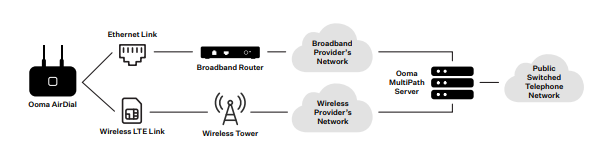
It Costs Less Than the Copper You Have Now
Carriers currently charge $80 to $280 per copper line every month, and that number climbs every year as they price the last customers off the network. Our POTS replacement starts under $30 per line per month. For most buildings the new equipment pays for itself inside the first year, and then it keeps saving every month after that. You end up with a more reliable line for a fraction of the bill.
Why Organizations Struggle to Replace POTS Lines Across Many Sites
If you manage a portfolio of buildings, the POTS shutoff turns into a logistics problem. Here is where large operators get stuck:
- Inventory is scattered. Most multi-location operators do not have a clean list of which lines do what. Are these elevator phones? Fax lines? Alarm panels? Gate intercoms? Until you map it, you cannot replace it.
- Each site has its own carrier mess. POTS lines are billed per line on multi-page invoices, often spread across three to five carrier accounts inherited from acquisitions. Porting numbers takes a clean audit first.
- Code requirements vary by jurisdiction. An elevator phone install in Cobb County has different test requirements than one inside Atlanta city limits. A multi-state portfolio adds another layer.
- Maintenance windows are tight. You cannot take an elevator phone offline during business hours. Site visits have to be scheduled around tenants, building staff, and elevator service contractors.
- Inspection paperwork. Every building needs an inspection-ready packet documenting the new device specs, battery test results, and code-compliance certification.
What we do for multi-site operators: one project manager owns the whole rollout. You hand us your portfolio. We run the line audit, build the migration schedule, port the numbers, and execute the installs. One point of contact, one status dashboard. We have done this for property management portfolios, retail chains, and healthcare networks across the Southeast.
Where POTS Replacements Are Critical
- Elevator emergency phones. Life-safety quality with 24 to 48 hours of battery backup.
- Fire alarm lines. NFPA 72 central-station communication that has to survive an outage.
- Public safety and emergency phones. Area-of-refuge, stairwell, parking-garage, and campus emergency phones.
- Gate and door entry intercoms. Visitor entry at multifamily buildings, gated communities, and offices.
- Pool emergency phones. Required at commercial and multifamily pools.
- Facility and building alarms. Temperature, water, generator, and environmental monitoring.
- Fax lines. Replace the line, or move to secure cloud e-fax.
- Burglar alarm lines. Intrusion panels, plus Alarm.com cellular monitoring.
- Backup and failover lines. A real line for when the VoIP system or internet goes down.
Typical Number of POTS Lines in a Multifamily Building
Most apartment complexes and multifamily buildings we audit have 3 to 12 POTS lines per building depending on size and amenities:
- 1 to 3 lines: elevator emergency phones (one per cab)
- 1 to 2 lines: fire alarm panel and sprinkler monitoring
- 1 to 2 lines: pool, gym, or amenity emergency phones
- 1 to 2 lines: gate intercom and parking entry
- 1 line: leasing office fax (sometimes)
- 1 to 2 lines: building manager and maintenance
A 200-unit garden-style community might have 6 to 8 POTS lines. A 30-story high-rise with 4 elevators might have 10 to 15. A monthly POTS bill in this market runs anywhere from around $500 for a single small building to $40,000 for a large multi-building portfolio. Whatever the number, it is money going to a service the carriers are actively working to retire.
Why Large Operators Lose Track of Hundreds of Analog Lines
The pattern repeats at nearly every large operator:
- Bills are not reconciled to assets. Accounting pays the carrier every month, but nobody on the operations side knows which line ID maps to which physical asset. Lines get paid for years after the equipment behind them was decommissioned.
- The carrier will not help. Asking AT&T or Lumen “what is this line for?” does not get you a useful answer. They sell the line. They do not know what is plugged into the other end.
- Acquisition history compounds the mess. Buy a property from another operator and you inherit their POTS lines on their carrier account. Now your portfolio carries three to five different account structures.
- Every site team thinks their lines are special. Field teams tell stories about lines that “have to stay on POTS for some reason.” Most of those reasons turn out to be myths.
- The decision touches five departments. IT, facilities, finance, risk, and legal all weigh in, and the project stalls.
How we help: we run the audit for you. We go site by site, identify every active POTS line, map it to a physical asset, rank replacement priority with life-safety lines first, and hand you one migration plan. No internal politics. We are the outside party that ties the records to the equipment.
What Happens When a Legacy POTS Line Fails
- An elevator passenger is trapped and the phone is dead. Personal injury liability, an ASME A17.1 violation, and a red-tagged building.
- A fire alarm panel goes offline silently. If a fire starts during the outage and the central station never gets the alert, your insurance carrier will look very hard at why.
- A gate intercom dies. First responders cannot get into the building.
- A burglar alarm panel drops offline. Break-ins go unreported, and claims get denied for “alarm panel not in working order.”
- A healthcare fax line fails. HIPAA-protected records go into the void, and that is an HHS audit risk.
None of this is theoretical. We get called in to fix every one of these scenarios. The owners who waited until something failed all wish they had planned the transition six months sooner.
Easy POTS Replacement: The Install Process
For most non-elevator POTS lines, including fax, alarm, and intercom:
- Site visit, about 30 minutes per site. Count lines, identify equipment, check signal on both pathways.
- Number port, a two-week parallel process while we order hardware.
- Install the POTS-in-a-Box device, typically one to two hours per site. Plug and play.
- Test every line. Confirm the device delivers a real dial tone and the equipment recognizes it.
- Decommission the old carrier line. We coordinate the cancellation with your existing carrier so you never double-pay.
For elevator phone replacement, the install follows the same steps with extra documentation for code compliance.
Replacing Elevator Copper Lines
For elevator phones specifically, the replacement device is a small ruggedized box that:
- Carries the line on dual-pathway routing, cellular plus internet, with automatic failover
- Holds 24 to 48 hours of internal battery backup, as code requires
- Self-tests monthly and logs the results for the inspector
- Mounts in your elevator equipment room and replaces the carrier copper-line drop
Full details are on our Elevator Phone Replacement page.
Get a Free Site Audit and Migration Plan
Tell us how many sites you have and roughly how many POTS lines you think are out there. We come out, audit the real count, flag the life-safety-critical lines, and hand you a fixed-price migration plan within 5 business days. No commitment.