
Elevator & Fire-Alarm Phone Lines
Your elevator phone is running on borrowed time
Copper POTS lines are being retired, and code still requires your elevator and fire-alarm phones to work. We move them to a dual-path connection that stays alive, passes inspection, and keeps your insurance intact.
Get a Free Site WalkGet a Free Site WalkLicensed in GA, AL, TN, FL, SC, NC · Most buildings done in one visit.
If you operate a building with elevators, you have a problem most owners do not see until it is too late. Your elevator emergency phones are required by code to work during a power outage, and the analog POTS lines they have run on for decades are being retired. Carriers have started filing discontinuance notices with the FCC, and in March 2025 the FCC cut the required customer notice period from 180 days to 90. A carrier can now give your building three months of warning before the copper goes dark.
The “we will just put it on the internet” plan that sounds easy is the same plan that gets a building flagged on inspection, or worse, leaves a passenger trapped during an outage with no way to call out. This page is about doing it right the first time. We install POTS-in-a-Box hardware purpose-built for elevators, engineered to satisfy fire marshal inspections, insurance underwriters, and ASME A17.1 and ADA elevator phone code. Most installs take a single visit, and we do them across Metro Atlanta every week.
Cal Fire and FDNY Compliant
The elevator solution we install is compliant with Cal Fire, the California State Fire Marshal, and FDNY, the New York City Fire Department. Those are two of the strictest fire authorities in the country. If a device clears those two authorities, it clears inspection here. That approval is your shortcut: instead of gambling on whether a setup will pass, you start with equipment that already has a track record with the toughest inspectors in the United States.
The life-safety solution we install carries the approvals inspectors and insurers look for






Plain VoIP Will Fail Your Inspection in Many Jurisdictions
You will hear the cheap pitch from inexperienced reps, IT generalists, and the person at your office who is “good with computers.” It sounds simple: run a VoIP line off the building’s internet, done. In many jurisdictions that setup will fail the elevator inspection outright. Here is why it does not meet code:
- Elevator emergency phones must be life-safety grade. They have to work when everything else does not, including during a power outage, an internet outage, or a carrier-side failure. A line tapped off your office router does none of that.
- The unit must hold its own backup power. A purpose-built elevator device carries internal batteries that keep the line alive for 24 hours minimum, and many jurisdictions require 48.
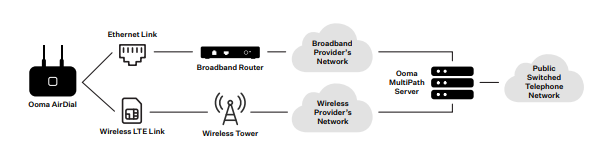
- The unit must survive a network outage. It needs a second path. Our devices are dual-pathway: the line runs over cellular and over the building internet, and it fails over automatically if either one drops.
- The line has to be dedicated to life safety. Sharing it with office VoIP traffic on a regular SIP trunk does not meet the standard.
If an elevator phone is wired the wrong way and there is an incident, a trapped passenger, a medical emergency in the cab, a fire, and the phone does not reach help, the problems stack up fast. The fire marshal flags the building, your insurance carrier can refuse the resulting liability claim, and you are personally exposed for the gap. Every commercial property policy we have reviewed carries a clause requiring code-compliant life-safety equipment. A non-compliant elevator phone is the textbook violation.
What “POTS in a Box” Means for Elevators
POTS-in-a-Box is the industry term for a small ruggedized device that replaces your old analog phone line. The device:
- Plugs in where your POTS line was. The elevator phone itself does not change. Only the line behind it changes.
- Runs dual-pathway. The call routes over cellular and over the building internet with automatic failover. The carrier copper line is gone, so there is nothing left for the carrier to shut off.
- Carries its own backup battery, 24 to 48 hours of standby. It monitors itself and alerts us before the battery degrades.
- Self-tests on schedule. Most jurisdictions require a monthly test. The unit runs it automatically and logs the result for the inspector.
- Keeps your phone number. The number ports from your old POTS line, so the signage inside the elevator stays correct.
We carry several device options because the right unit depends on the building: a single elevator versus a bank of eight, the signal where the device sits, and whether you want one device per phone or a multi-port unit serving four to eight elevator phones from one box. We pick the right one during the assessment.
It Costs Almost the Same as Cheap VoIP, and It Actually Works
Carriers now charge $80 to $280 per copper line every month for analog service that gets less reliable each year. A code-compliant, dual-pathway POTS replacement from us starts under $30 per line per month. For most buildings the replacement costs less than the copper it retires.
Here is the part that matters most. The gap between a bare-bones plain-VoIP line and a proper code-compliant elevator solution is small, often under $20 a month. For that $20 you get the dual-pathway routing, the 24 to 48 hour battery, the automatic monthly self-test, and equipment that passes inspection. This is a life-safety system. It is not the place to gamble $20 a month against a trapped passenger and a red-tagged building.
Install Process
Most elevator phone replacements are a one-visit install. The typical timeline:
- Site survey, about 30 minutes. We inspect the equipment room, check signal on both pathways, count the phones to replace, and confirm the power source.
- Number port. We order the port of your existing elevator phone numbers from your current carrier. It takes about two weeks and runs in parallel with the install.
- Install the device in the equipment room, mounted on the wall or in a rack and wired to the existing elevator phone wiring.
- Test every car. We push the emergency button, confirm dispatch reaches you, run the auto-test cycle, and document the results.
- Sign off the paperwork for the inspector with unit specs, battery test results, and the monthly test schedule.
Total install time per building is typically half a day. We do these constantly, so we know which devices pass inspection on the first try and which ones the inspector will flag.
What Happens When a Legacy POTS Line Fails
Carriers stopped maintaining the copper plant years ago, and it shows:
- Service quality on remaining POTS lines is dropping. Lines fail in damp weather, after storms, or just from age.
- Repair times have ballooned. A POTS repair that used to take 24 to 48 hours now leaves clients waiting two to three weeks. The elevator phone is dead that entire time.
- Prices keep climbing. Carriers are pricing the last customers off the line, which is how a copper line reaches $280 a month.
- The shutoff is one-way. Once a carrier retires POTS in your central office, there is no path back. The elevator phone stays silent until someone replaces it.
The “wait until it dies” approach that works for desk phones does not work for elevators. With a desk phone you lose a few days. With an elevator phone, the next person who pushes the emergency button finds nothing on the other end, and that is the day the lawsuit gets filed.
Elevator Phone Code Requirements
The requirements your replacement has to meet:
- ASME A17.1 and CSA B44, the elevator code. Requires a two-way emergency communication device that reaches a 24/7 monitoring service.
- ADA Title III. Emergency communication has to work for hearing-impaired passengers, with a visual indicator that help is being summoned.
- NFPA 72, fire alarm and life-safety code. The elevator phone has to sit on a circuit that survives a power outage long enough for evacuation.
- Local jurisdiction code. Atlanta, Cobb, DeKalb, Fulton, and Gwinnett each have their own variations. Some require monthly testing, some quarterly. We know the local nuances.
- Insurance carrier requirements. Most commercial property policies carry a code-compliant life-safety equipment clause. Read your policy.
The rep off the street will tell you the cheap setup “will work.” The fire marshal will not agree, and your insurance underwriter definitely will not. We see this play out every quarter when a building gets red-tagged because someone tried to save a few dollars on the elevator line.
Elevator POTS Replacement Across Metro Atlanta
We install elevator POTS replacements for:
- Multifamily and apartment buildings, high-rise, garden-style, and mixed-use
- Hotels, both chain and independent
- Office towers and multi-tenant commercial
- Hospitals and medical office buildings
- Schools and universities
- Government and municipal buildings
- Industrial facilities with passenger and freight elevators
If you have one building with one elevator, we can install in half a day. If you have a portfolio of 50 buildings across the metro, we run a coordinated rollout with a phased schedule, a single point of contact, ported numbers, and an inspection-ready packet for every building. For a deeper look at elevator emergency phones, see our dedicated site, Elevator Phone Replacement.
Get a Free Elevator Phone Assessment
Tell us how many buildings, how many elevators, and your current carrier. We send a fixed-price install quote within one business day along with a sample monthly cost. No offshore handoff and no sales script. We do this every week, and we know what passes inspection in your jurisdiction.
Frequently Asked Questions
How long does a typical elevator POTS replacement take to install?
Half a day per building for most installations. We can phase a multi-building portfolio over two to six weeks depending on scale.
Can I keep my existing elevator phone number?
Yes. We port the number from your current carrier. Allow about two weeks for the port to complete. It runs in parallel with the install.
What if cellular signal in my elevator equipment room is weak?
We measure signal during the site survey. If the room is in a basement or has poor reception, we install an external antenna, and the dual-pathway routing also carries the line over the building internet as a second path. Every building gets the right configuration.
Will this pass fire marshal inspection?
Yes. The elevator solution we install is compliant with Cal Fire and FDNY, two of the strictest fire authorities in the country, and meets ASME A17.1, NFPA 72, and ADA requirements. We provide an inspection-ready packet documenting battery backup duration, monthly test logs, and code compliance.
What is the difference between this and just running VoIP off our internet?
Plain internet VoIP fails when your internet fails, and in many jurisdictions it fails the elevator inspection too. A code-compliant POTS replacement runs dual-pathway over cellular and internet with automatic failover, carries its own 24 to 48 hour battery, and uses carrier-grade routing. It works when your building power and internet are both out, which is exactly when the elevator phone gets used. The cost difference is often under $20 a month.