
Most offices moved their phones to VoIP, and that is fine until the internet goes down. When it does, the modern phone system goes silent, and the line that used to be the safety net, an analog POTS line, is being retired by the carriers. POTS lines, the analog phone lines buildings have run on for decades, are being retired. AT&T, Verizon, Lumen, and Frontier have all filed discontinuance notices with the FCC, and in March 2025 the FCC cut the required customer notice period from 180 days to 90. A carrier can now give your building three months of warning before the copper goes dark.
A backup line is not about everyday calls. It is the line the front desk, the emergency contact, or the alarm uses when the primary system is down. We provide that line with a dual-pathway POTS-in-a-Box device, so the failover actually works when you need it.
The life-safety solution we install carries the approvals inspectors and insurers look for






Why a Backup Line Still Matters
- VoIP fails with the internet. When the building connection drops, so does every VoIP phone. A backup line on cellular keeps a working number.
- Critical contact numbers. A front desk, a security desk, or an after-hours line that has to answer no matter what.
- Alarm and life-safety failover. Many panels expect a secondary line if the primary path fails.
- Continuity for small sites. A branch or remote office that cannot afford to go dark.
A Backup Line Has to Be Truly Independent
A backup line that runs on the same internet connection as the system it backs up is not a backup at all. The whole point is independence. Our dual-pathway device carries the line over cellular, so when the building internet is down the backup line is still up. That is the difference between a real failover and one that fails at the same moment.
Dual-Pathway, Not Just Cellular
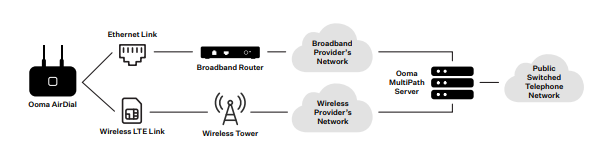
Every device we install runs dual-pathway. The line travels over cellular and over your building internet at the same time, and it fails over automatically the instant either path drops. Cellular-only replacements lose the line in a dead zone or a tower outage. Internet-only setups lose it whenever the building connection blips. Two independent paths is what keeps the line up when it is needed most.
It Costs Less Than the Copper You Have Now
Carriers now charge $80 to $280 per copper line every month, and the price climbs every year as they push the last customers off the network. Our POTS replacement starts under $30 per line per month. For most buildings the replacement costs less than the copper line it retires, and it is a more reliable line.
Install Process
A backup line is a single-visit install:
- Site visit, about 30 minutes. We identify every line, check signal on both pathways, and confirm the power source.
- Number port. We port your existing numbers from the current carrier. It takes about two weeks and runs in parallel with the install.
- Install the POTS-in-a-Box device. It plugs in where the copper line was. The equipment behind it does not change.
- Test every line. We confirm a real dial tone and that the connected equipment recognizes the line.
- Decommission the carrier line. We coordinate the cancellation so you never double-pay.
Get a Free Backup Line Consultation
Tell us what your backup line needs to protect. We recommend the right configuration and send a fixed-price quote.