
A burglar alarm is only as good as its connection to the monitoring station. If the panel cannot report, a break-in goes unanswered, and insurers deny claims when the alarm was not in working order. Most older intrusion panels report over an analog POTS line. POTS lines, the analog phone lines buildings have run on for decades, are being retired. AT&T, Verizon, Lumen, and Frontier have all filed discontinuance notices with the FCC, and in March 2025 the FCC cut the required customer notice period from 180 days to 90. A carrier can now give your building three months of warning before the copper goes dark.
We keep your alarm reporting two ways, and we will tell you which fits. Replace the line behind the panel with a dual-pathway POTS-in-a-Box device, or upgrade to Alarm.com cellular monitoring, a modern monitoring path with a phone app, no copper line at all, and the most reliable signal to the central station.
The life-safety solution we install carries the approvals inspectors and insurers look for






Option One: Replace the Line, Keep the Panel
If your intrusion panel still does its job, the fastest fix is to keep it and replace the carrier line. The POTS-in-a-Box device presents a standard dial tone to the panel’s communicator, so it reports to your monitoring station exactly as before, with dual-pathway routing behind it.
Option Two: Upgrade to Alarm.com Cellular Monitoring
If the panel is aging, Alarm.com cellular monitoring is the stronger long-term answer. It reports to the central station over a dedicated cellular path with no copper line involved, adds a phone app for arm, disarm, and alerts, and is the monitoring path insurers and central stations prefer. We assess your panel and tell you honestly whether to replace the line or upgrade.
A Dead Alarm Line Is a Denied Claim
Read any commercial property or burglary policy and you will find a clause requiring the alarm system to be in working order. If the reporting line was dead when the break-in happened, the claim is exposed. As carriers retire copper, a panel that reported fine last year can be silently offline now. Replacing the path before it fails protects both the building and the coverage on it.
Dual-Pathway, Not Just Cellular
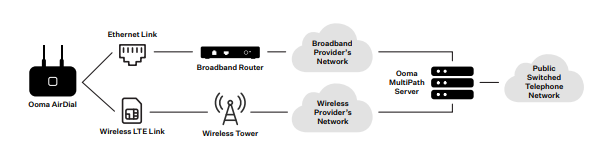
Every device we install runs dual-pathway. The line travels over cellular and over your building internet at the same time, and it fails over automatically the instant either path drops. Cellular-only replacements lose the line in a dead zone or a tower outage. Internet-only setups lose it whenever the building connection blips. Two independent paths is what keeps the line up when it is needed most.
It Costs Less Than the Copper You Have Now
Carriers now charge $80 to $280 per copper line every month, and the price climbs every year as they push the last customers off the network. Our POTS replacement starts under $30 per line per month. For most buildings the replacement costs less than the copper line it retires, and it is a more reliable line.
Get a Free Burglar Alarm Line Assessment
Tell us about your alarm panel and current monitoring. We recommend line replacement or an Alarm.com cellular upgrade and send a fixed-price quote.